If you’re planning a trip to Costa Rica, you’re going to hear the phrase pura vida everywhere. It is said at the airport, in shops, from your driver, at restaurants, and even when things go wrong. But what does it actually mean?
Pura vida isn’t just a saying. After living in Costa Rica for several years, we’ve learned it’s a mindset that shapes how people handle stress, time, relationships, and daily life here. Understanding it before you arrive will change how you experience the country.
So, let’s get to the full Pura Vida explanation!
Don’t Want to Read It All?
Short on time? Here’s the quick version of what pura vida means.
- Pura vida literally means pure life.
- Costa Ricans use it as a greeting, a goodbye and a way to say thanks.
- It’s a whole vibe, about slowing down and enjoying life.
- Feel it most on the Nicoya Peninsula, in San Gerardo de Dota and in Manzanillo.
- Learn a few more phrases in our Costa Rica language guide.
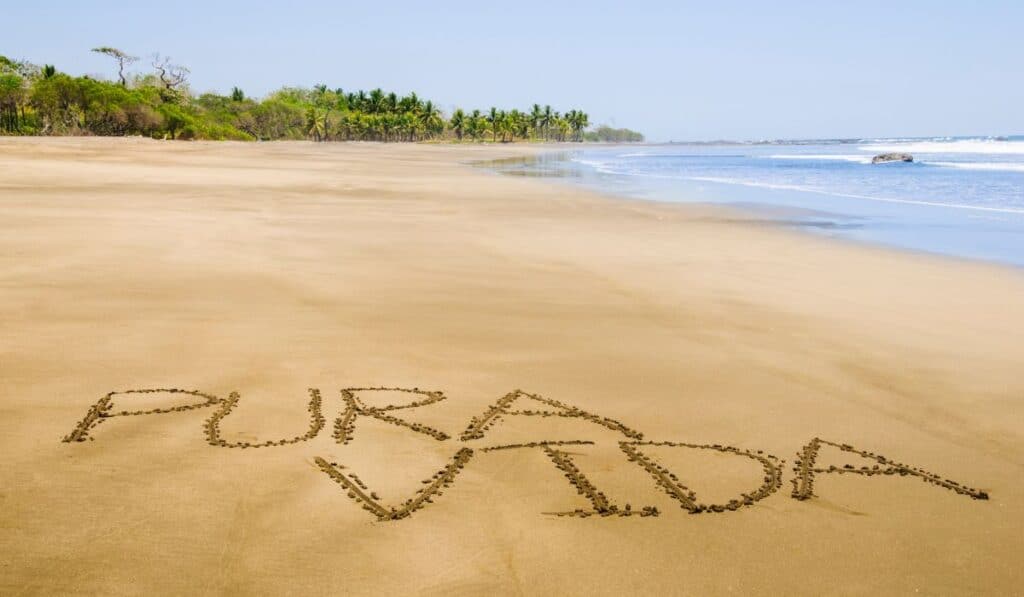
What does Pura Vida mean?
Directly translated, pura vida means “pure life.” But in Costa Rica, that literal translation doesn’t really capture how the phrase is used.
In real life, pura vida is shorthand for:
- life is good
- everything’s okay
- no worries
- don’t stress about it
It’s less about having a perfect life and more about choosing not to let small problems ruin your day.
You’ll often hear pura vida used to acknowledge issues, smooth over mistakes, and keep things moving without tension. It really reflects the attitude of the culture here. People are generally optimism, patience, and perspective, especially when things don’t go exactly as planned.
It’s pronounced “poo-rah vee-dah.”
If you’re coming from a culture where efficiency, speed, and control are highly valued, this mindset can feel unfamiliar at first. But once you understand what pura vida actually represents, a lot of Costa Rican daily life starts to make more sense.
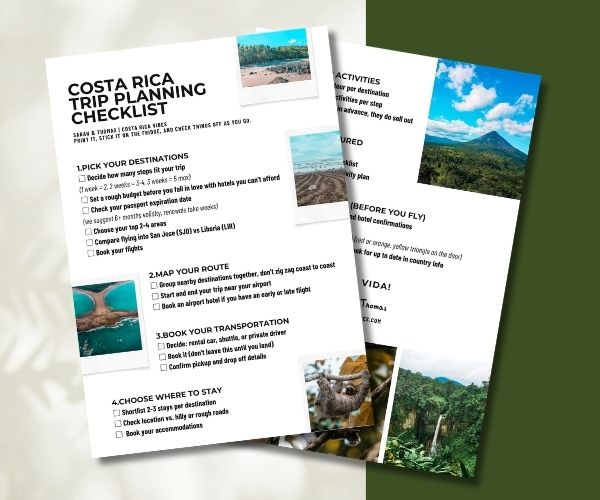
Is Costa Rica planning feeling overwhelming? Let us break it down for you.
Sign up for free, step by step guidance (plus your printable planning checklist right now) and we’ll tell you exactly what to do next, and when.
When is the phrase used?
One of the confusing things about pura vida is that it works in almost every situation. There isn’t one “correct” use.
You’ll hear Costa Ricans use pura vida as:
- A greeting or goodbye: It’s completely normal to hear it instead of hello or goodbye, especially in casual settings.
- A way to downplay stress or problems: When something goes wrong, pura vida is often used to say, “It’s not worth getting worked up over.” Example: “My day was really stressful. Oh well! Pura vida!”
- A polite response to an apology: If someone is late, bumps into you, or makes a small mistake, pura vida is an easy way to say “no problem.”
- Example:
- A: “Sorry I’m late, traffic was crazy.”
- B: “Pura vida.”
- Example:
How can you respond to someone saying Pura Vida?
If used as a greeting or goodbye, just say “Pura Vida” back to them.
And if you want to sound a little more local, “tuanis” works too. Tuanis is Costa Rican slang that roughly means good, cool, or all good. It’s a bit more casual and laid-back, but very common.
What you need to know about the Pura Vida Vibe in Costa Rica
I think sometimes tourists struggle to take on this mindset while visiting Costa Rica, and we get it!
You of course want your vacation to be perfect and go according to plan.
Unfortunately, things don’t always go that way here. You may deal with bad traffic, rain storms, delayed activities etc.
We find it works best to go into things with the mindset that sometimes something will go wrong. And, usually this ends up as a funny thing we can look back on.
For example, when we moved to San Jose we needed to sign up for WIFI. It ended up being a ridiculous and humorous experience.
First, we went to the internet provider and had to wait about 30 minutes for our number to be called to meet with an employee.
While meeting with the employee they asked us where we live. There are no addresses in Costa Rica so we had to explain our address like, “20 meters southwest of the soccer field. It is a pink house with a black gate.”
Luckily we brought a friend with us who could do this in Spanish better than we could.
Then, about a week later some guys showed up at our house to install the WIFI.
I expected they would just hand me a router and connect it or something. No, no. These guys blocked traffic on the road, got on our roof, and started connecting wires across the road to the telephone pole. They then stapled wiring through the house.
It was probably about a six-hour project with a lot of breaks for snacks, chatting on the side of the road, long phone calls, etc.
About a week later the WIFI stopped working so we had to go back to the shop and wait again to talk with someone. They said they would send a technician out in about a week. So, again we were without WIFI.
When they finally came out to check, it turned out that they had stapled through one of the fiber optic cables and that is why the internet wasn’t working. They then had to cut the wiring where the break was and rewire the rest.
Ugh! It was a total headache (especially as someone who works from home and needs WIFI), but also kind of humorous to watch how relaxed they were about it.
And, at the end of the day, there was nothing we could do about it. You kind of just have to shrug your shoulders and say, “Pura Vida.” At the end of the day its a funny story.
And, this is just one instance. I could tell you stories all day long of funny Costa Rica-isms.
Where in Costa Rican Can You Fully Feel the Pura Vida Vibe?
I think almost every place in the country has this feeling but a few of our favorites are:
Nicoya Peninsula
The Nicoya Peninsula is one of the few Blue Zones in the world. This means that people here regularly live to over the age of 100.
It is believed that a big part of that is due to their diet, being close to their families, staying physically active until an older age, and also taking time to relax. I feel like this area really embraces the Pura Vida vibe perfectly.
San Gerardo de Dota
San Gerardo de Dota is not like any other place you will find in Costa Rica. It is a moody little cloud forest town in a canyon. The town lives off of tourism, but most tourists to the country don’t come here.
We love this area for hiking, birdwatching, eating trout, and cozying up by a fire.
People here always seem to be excessively happy and nice. And, for whatever reason, the service at restaurants here is beyond anything I’ve experienced at any other restaurants in the country.
Manzanillo
Manzanillo is on the Caribbean coast and has a bit of a different vibe than the Pacific side. We like it because the beaches are beautiful, there is good hiking, and it is a good jumping-off point if you want to head down to Panama.
People here seem to take everything in stride. Nothing is rushed and because not everyone lives off of tourism they don’t seem to have the same tourism pressures that some other parts of the country seem to have.
How can you adopt a Pura Vida Costa Rica lifestyle?
In our experience, it is somewhat difficult to keep the Pura Vida lifestyle outside of Costa Rica.
We love the relaxed lifestyle here, but taking your time to get things done and staying calm doesn’t always translate to the more fast pace lifestyle you are likely used to.
A few things we have realized that work for us are:
- Taking on fewer commitments. This allows us to have more free time to relax. In our experience, this has helped us a lot in feeling like we actually have the chance to enjoy life instead of rushing from one thing to the next.
- Living in Costa Rica has made us realize how much negativity is in the world and how that gets us nowhere. Especially lately, I find myself getting very bogged down by the never ending depressing news cycles. It’s been difficult for me, but I’m really trying to limit my news exposure to keep my own internal peace. Maybe try the same!
- We are horrible examples of this because Thomas and I both live so far away from our families, but I think a big part of the happy attitude in Costa Rica is because family is so important. It is very common for families to get together every weekend and for every birthday for big celebrations of happiness.
Other Things to Note
- If you would like to get some Pura Vida souvenirs you will have no problem finding tons of things at souvenir shops throughout the country or at the gift shops in the airport.
- If you are nervous about speaking Spanish while traveling, check out our guide to Spanish.
- Another term you probably want to know is “tico/ tica.” Ticos is the general term for all Costa Rican people. Tico is the male version and tica is female.
- If you are interested in learning more about Costa Rica, check out our guide to the culture.
FAQ: Pura Vida Meaning and Lifestyle
What does “pura vida” mean in Costa Rica?
“Pura vida” literally translates to “pure life,” but in Costa Rica it’s used to mean that life is good, everything is okay, and there’s no need to stress about small things.
How do you respond when someone says Pura Vida?
The easiest response is to simply say “pura vida” back. Some locals also say “tuanis,” which means something like “all good.”
What language is the phrase Pura Vida?
Pura Vida is a Spanish phrase meaning “Pure Life.” It is most commonly used in Costa Rica.
Do Costa Ricans actually say, “Pura Vida”?
Yes. Locals use “pura vida” daily as a greeting, a response to “how are you,” or a way to say “no worries.”
Is “pura vida” just a tourist phrase?
No. While visitors hear it often, “pura vida” is part of everyday Costa Rican language and culture.
Travel easier
Plan Smarter, Travel Easier
Before you go, here are the tools we use for every Costa Rica trip.
Need help planning? Try our free day-by-day trip planner, grab our 7-day itinerary for first-timers, or join our email list and we will walk you through it step by step.
You might also be interested in:
- Costa Rica Language Guide: How Much Spanish Do You Actually Need to Get By?
- Costa Rica Blue Zone: Why Nicoya Is One of the World’s Longest-Living Regions
- Costa Rica Souvenirs: Unique Goods That You’ll Love
- 12 Best Things to Do in San Gerardo de Dota, Costa Rica
- Costa Rica Facts: Everything Fun (and Useful) to Know Before You Go
Travel easier
Plan Smarter, Travel Easier
Before you go, here are the tools we use for every Costa Rica trip.
Need help planning? Try our free day-by-day trip planner, grab our 7-day itinerary for first-timers, or join our email list and we will walk you through it step by step.

Meet the writer
Sarah McArthur
Sarah is the co-founder and main writer of Costa Rica Vibes. Originally from the US, she has lived in San José, Costa Rica since 2016 with her husband Thomas, who takes the photos you see on this site.
Together they have been writing about Costa Rica since 2017, drawing on years of road trips, hotel stays and tours around the country. We personally vet everything before we publish it.
Follow along on Instagram · Pinterest · Substack
or join our email list for trip planning help.
Meet the writer
Sarah McArthur
Sarah is the co-founder and main writer of Costa Rica Vibes. Originally from the US, she has lived in San José, Costa Rica since 2016 with her husband Thomas, who takes the photos you see on this site.
Together they have been writing about Costa Rica since 2017, drawing on years of road trips, hotel stays and tours around the country. We personally vet everything before we publish it.
Follow along on Instagram · Pinterest · Substack
or join our email list for trip planning help.