
Costa Rica has an incredible variety of tropical fruits, many of which you won’t find at your local grocery store back home. Some taste like candy, some look like aliens, one needs to be boiled before you can eat it, and another one tastes like ice cream. It’s such a fun cultural food experience to try these when you visit.
One of my favorite things to do whenever we have visitors come to stay with us is to take them to the nearest farmers’ market and hand them a crazy tropical fruit they’ve never seen before.
We’ve been living here since 2016 and we still occasionally stumble across something new at the market. Here’s a roundup of the Costa Rica fruits worth seeking out on your trip, including what they taste like and how to actually eat them.
Don’t Want to Read It All?
Short on time? Here are a few Costa Rica fruits you have to try.
- Maracuya, also known as passion fruit.
- Rambutan, the spiky red fruit with a sweet center.
- Mangosteen for something sweet and tangy.
- Pitahaya, also known as dragon fruit.
- Cacao, the fruit chocolate comes from. Learn more about chocolate in Costa Rica.

1. Maracuya (Passion Fruit)

What it Tastes Like
On its own, maracuya is intensely sour. Add a bit of sugar and it transforms into something bright, punchy, and addictive.
How to Eat It
We almost always have a pitcher of passion fruit juice in our fridge. To make it: scrape the insides into a blender, blend until smooth, then strain out the seeds. Add sugar and water to taste. Simple and absolutely delicious.
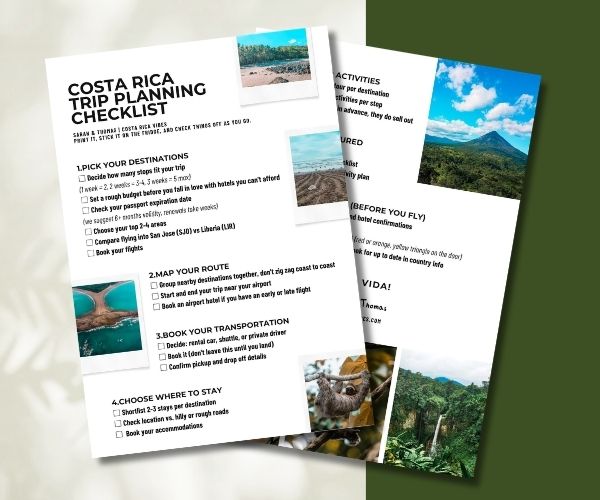
Planning a trip to Costa Rica? We’ll walk you through it step by step
Sign up now and get your free trip planning checklist instantly.
I have also heard of people putting passion fruit seeds in salads to add a fruity taste with a bit of crunch.
Pro tip: Passion fruit makes a killer margarita base. Just saying.
2. Cas (Sour Guava)

What it Tastes Like
Tart and sour. It is very much a pucker-up fruit. Not something you’d bite into raw for fun, but absolutely perfect in juice form.
How to Eat It
Cas juice (jugo de cas) is one of the most common drinks you’ll find at Costa Rican sodas (local restaurants) and restaurants. It’s made the same way as maracuya. Blend, strain, add sugar and water.
I’ve also heard of people eating it raw with salt, though I haven’t tried that myself yet.
💡 Sarah’s Tip
Passion fruit makes a killer margarita base. And if you love chocolate, check out a chocolate tour while you’re here.
3. Granadilla

What it Tastes Like
Sweet with a slightly bitter note if you chew the seeds. It’s one of the more unusual food experiences you’ll have in Costa Rica.
How to Eat it
This is hands-down the most fun fruit to watch someone try for the first time. Peel back the hard shell to reveal what honestly looks like a sack of brains (I warned you). Bite in, suck out the juice and pulp, and spit or swallow the seeds whole. Don’t chew them, they’re bitter.
Weird? Yes. Worth it? Absolutely!
If you try this, definitely report back! It’s a tasty fruit, just really weird to eat at first. 🙂
4. Pejibaye
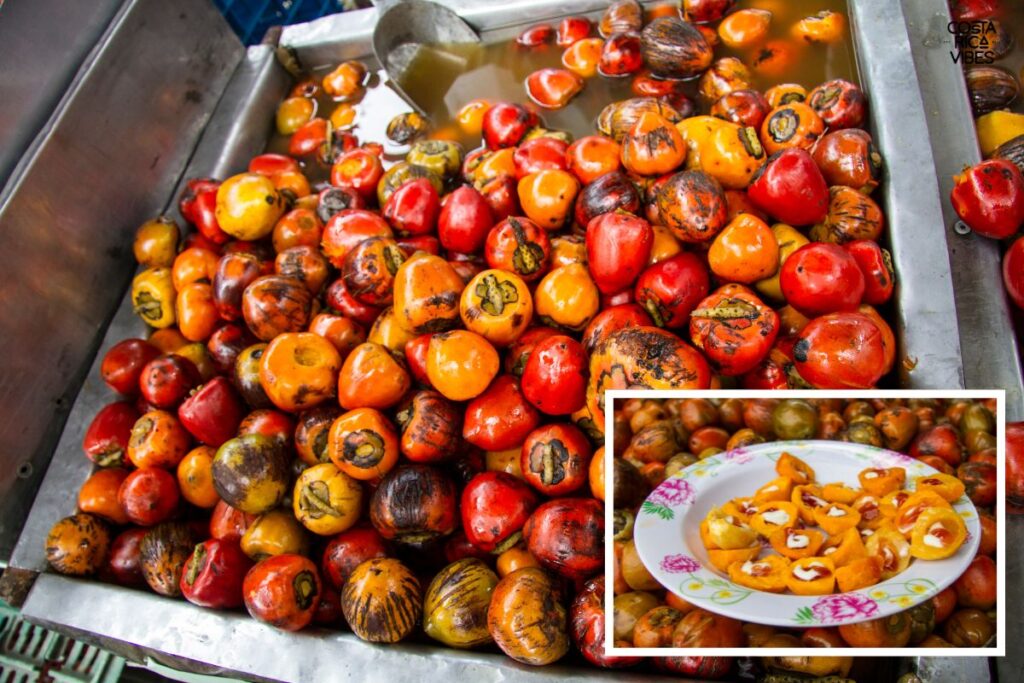
Pejibaye is a red or orange fruit grown in clusters on a really tall palm tree.
The harvesting process is interesting and a bit terrifying to watch.
Basically, a really long pole with a large blade on the end is used to cut off the clusters. You, of course, have to be extremely careful because large clusters of fruit are falling directly at you from high above.
What it Tastes Like
Think yucca crossed with a firm sweet potato. Dense, savory-leaning, and starchy.
How to Eat it
It almost always comes pre-boiled in a light brine when you buy it at the market. If not, you’ll need to boil it for a couple of hours before eating.
Once cooked, peel off the skin (you’ll want a good peeler), slice it up, and top with mayonnaise or natilla (Costa Rica’s version of sour cream). It’s a lot of effort, but worth it.
5. Manzana de Agua (Malay Apple)

What it Tastes Like
Like a cross between an apple and a pear, but juicier and with a satisfying crunch. Refreshing and not too sweet.
How to Eat It
Just bite in and enjoy! There’s a pit in the center like an apple. These have honestly replaced regular apples for me. They’re lighter, more refreshing, and perfect as a snack on a hot day.
Want a fun food experience? These day tours are awesome!
6. Guanabana (Soursop)
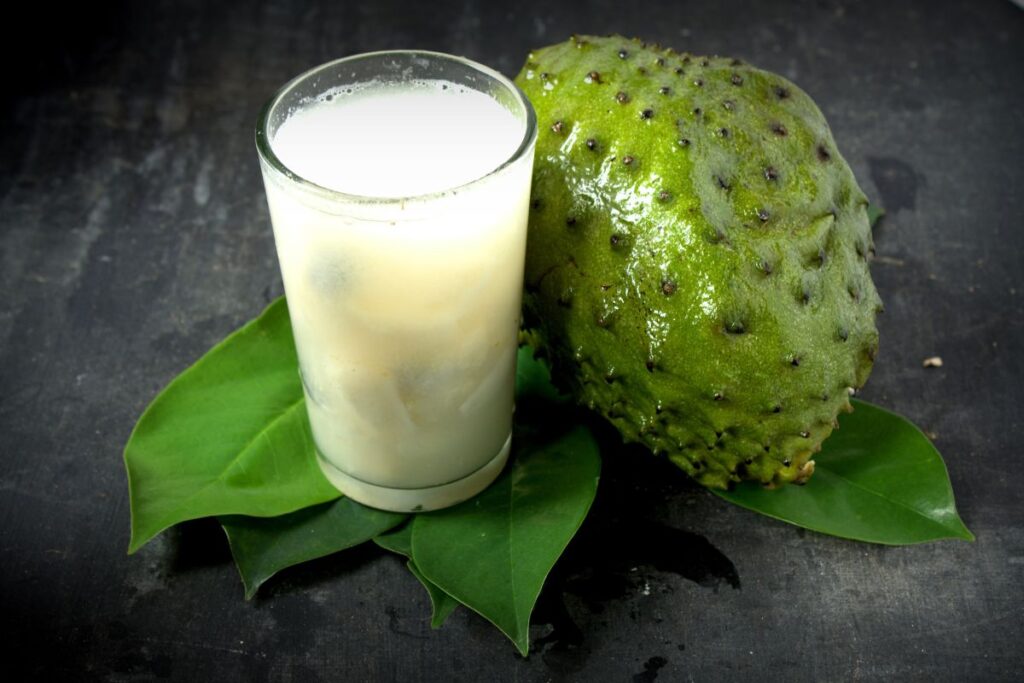
What it Tastes Like
Sweet with a hint of acidity. It’s kind of like a tropical fruit salad in one bite.
How to Eat It
The flesh is a bit stringy raw, so most people have it blended. A guanabana smoothie with milk is one of those drinks that tastes like dessert.
It’s also showing up in more health-focused contexts lately. You’ll see it at juice bars and wellness cafes all over Costa Rica.
7. Rambután (Rambutan)
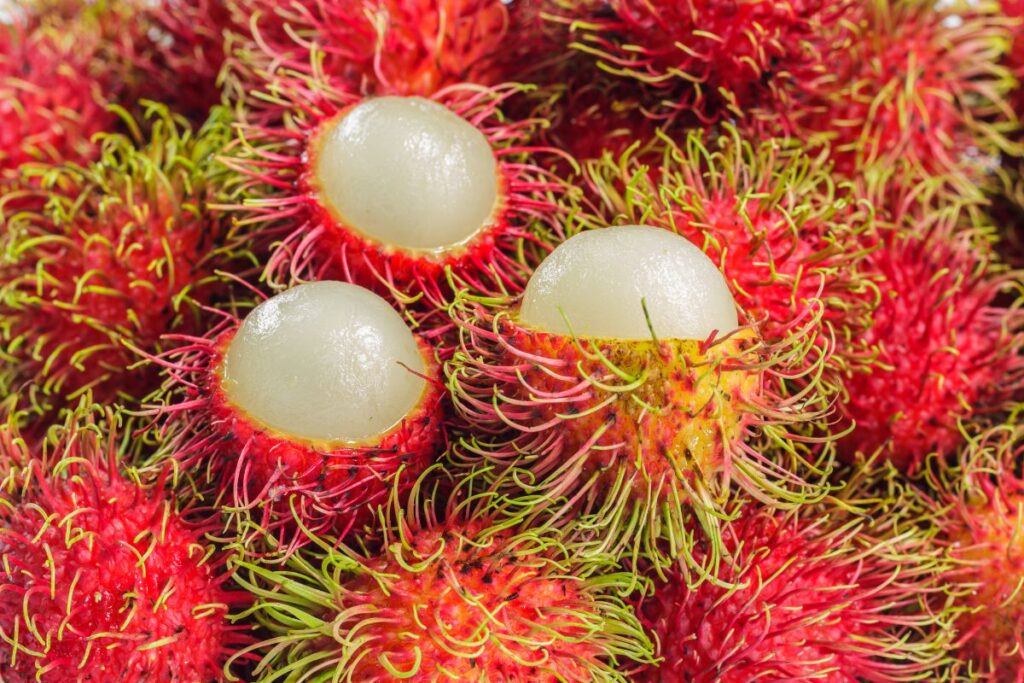
What it Tastes Like
Sweet, juicy, and delicious. These are a close relative of lychee, with a similar translucent white interior.
How to Eat It
Those spiky red orbs look intimidating but eating them is easy. Use your fingernail to break the outer skin and pop the white fruit inside straight into your mouth. Buy a whole bag at the market, you’ll likely go through them faster than you expect.
8. Guaba (Ice Cream Bean)
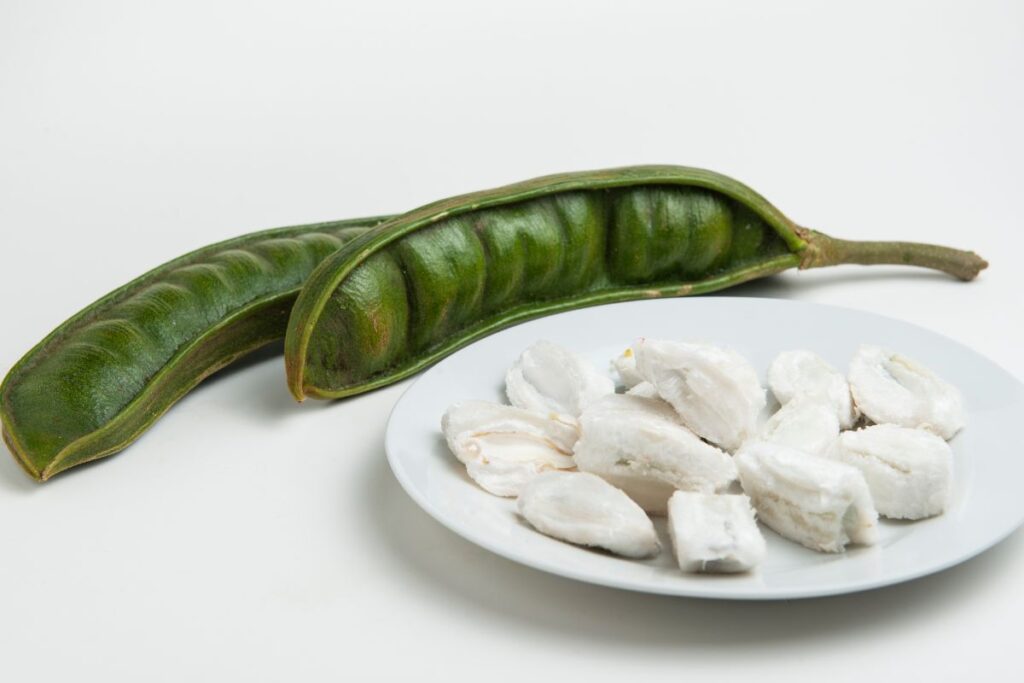
“What is that weird dried bean?” is what I thought when I first saw guaba. We were so curious that we had to buy them and try them out.
What it Tastes Like
Very mildly sweet and fluffy. I think it’s more of a texture experience than a flavor bomb. The name “ice cream bean” sounds more exciting than the actual eating experience, to be honest.
How to Eat It
Crack open the long pod to reveal white fuzzy fruits inside, each surrounding a large seed. You suck the soft flesh off the seed and discard the seed itself. It’s worth trying once, just don’t buy a whole bag unless you have a lot of patience.
9. Mangostán (Mangosteen)

What it Tastes Like
Sweet, creamy, and delicious! The texture is soft and the flavor is clean.
How to Eat It
The hard purple shell opens up beautifully. Use a knife to score it around the middle, then lift off the top half. The white segments inside peel apart easily.
Larger pieces have a seed, spit it out. The smaller ones are pure fruit.
These also usually keep well for a week or two, which is a bonus.
10. Pitahaya (Dragon Fruit)

The hipster of fruits! If you are active on Instagram, I’m sure you’ve seen some perfect pictures of people eating these.
What it Tastes Like
Mildly sweet with a tiny bit of tang. Beautiful to look at and so refreshing to eat.
How to Eat It
Cut it in half and scoop out the inside with a spoon. That’s really it. You can blend it, add it to smoothie bowls, or just eat it straight.
Note: pitahaya is seasonal and a bit pricier than other fruits here. You’ll mostly find it in late summer and early autumn.
Cacao

What it Tastes Like
The white pulp around the seeds is slightly tangy. It’s definitely not what most people expect from something connected to chocolate.
Want a fun chcolate experience? These are some of our favorite tours!
How to Eat It
Yes, this is where chocolate comes from! Cut the pod open lengthwise and you’ll find seeds wrapped in white pulp. You can suck on the pulp directly. It’s interesting but not something you’d eat by the bowlful. The seeds themselves can be dried, roasted, and ground into cocoa powder.
Pro Tip: If you love chocolate, check out a chocolate tour while in Costa Rica. It’s really fun and usually involves eating lots of delicious sweet treats.
You can find out more with our guide to chocolate tours.
Other Costa Rican Fruits

Although these fruits are not highly unusual, there are a few other tropical fruits you should definitely eat while on a trip to Costa Rica.
Mango
Mangos are found in almost every fruit salad you will have in Costa Rica.
Another unique way to eat them is with salt before they are fully ripe. Usually, if you are driving on the highway and get stuck in traffic you will see locals selling these in little plastic bags.
Coconut
On the beach, you can always find people selling fresh coconuts to drink out of.
There aren’t many things more enjoyable than walking down a beautiful beach while drinking fresh coconut water.
When you are done, you can always cut it open and eat the pulpy white fruit.
Papaya
Papaya is found in most fruit salads you will have at breakfast in Costa Rica.
I am very particular about papaya and will only eat it when it is extremely fresh. If it is the tiniest bit too ripe I think it tastes like vomit haha.
Limes
I’m sure you have most likely eaten plenty of limes in your life, but the limes in Costa Rica are extra juicy.
The best time to eat them is during the rainy season when you can buy about 10 for $1.
Bananas
Next time you go to your local grocery store, check where the bananas come from. It is not unusual to see Costa Rican bananas at grocery stores all over the world.
It is always nice to eat a fresh banana, from the country it grew up in.
Plantains
Plantains are a common breakfast food in Costa Rica.
They are often served fried with Gallo pinto (rice and beans), scrambled eggs, and a fruit salad. Delicious!!
Pineapple
Pineapple is grown all over Costa Rica.
Just like with bananas, check at your local grocery store and see where your pineapple comes from.
There is a good chance it came from Costa Rica.
Sugar Cane
Sugar cane isn’t a fruit, but I will add it here anyway.
Sugar cane is grown throughout the country and it is even possible to go on a sugar cane tour to see the entire production process from cane to sugar.
Where to Buy Fruits in Costa Rica

Our favorite place to find unusual Costa Rica fruits is at a local farmers’ market (feria). Almost every town has one at least once a week. Just ask at your hotel or rental for the nearest one. It’s one of the best ways to experience everyday local life here and prices are significantly cheaper than supermarkets.
Roadside fruit stands are another great option. You’ll spot them throughout the country, sometimes run by a single person with a folding table. These are usually very fresh, local, and the vendor will often help you figure out how to eat whatever you’ve picked up.
For convenience, you can also find many of these fruits at any major supermarket, but the selection is smaller and the prices are higher.
And if you want the smoothie experience (which I highly recommend), most sodas and restaurants offer fresh juice. Ask for it en agua (with water) or en leche (with milk).
FAQ: Costa Rica Fruit
Is it safe to eat the fruit in Costa Rica?
Yes, typically it is very safe to eat the fruit. However, always purchase your fruit from a trusted source. It is best not to pull things off the trees and eat them unless you know for sure it is a fruit and not something poisonous.
Which fruits does Costa Rica export?
Costa Rica exports; pineapple, bananas, watermelons, mangoes, papayas, passion fruit, and guavas to destinations around the world. Next time you are at the grocery store, check the bananas, pineapple, or mangoes. There is a good chance they came from Costa Rica.
What fruit is Costa Rica most well known for?
I would say that Costa Rica is most well-known for pineapple and bananas. Growing and exporting both fruits are a huge industry for the country.
You might also be interested in:
- 15 Traditional Costa Rican Foods You Have to Try
- Costa Rica Chocolate Tours – A Fun Activity for All Ages
- Costa Rica Grocery Stores: Where to Go & What to Buy
- Costa Rica Coffee Tours: Best Farms to Visit Across the Country
- Is Costa Rica Expensive? What to Budget for Vacation Costs
You might also be interested in:
Travel easier
Plan Smarter, Travel Easier
Before you go, here are the tools we use for every Costa Rica trip.
Need help planning? Try our free day-by-day trip planner, grab our 7-day itinerary for first-timers, or join our email list and we will walk you through it step by step.

Meet the writer
Sarah McArthur
Sarah is the co-founder and main writer of Costa Rica Vibes. Originally from the US, she has lived in San José, Costa Rica since 2016 with her husband Thomas, who takes the photos you see on this site.
Together they have been writing about Costa Rica since 2017, drawing on years of road trips, hotel stays and tours around the country. We personally vet everything before we publish it.
Follow along on Instagram · Pinterest · Substack
or join our email list for trip planning help.