
Costa Rica Ecotourism: Eco Lodges, Activities & Sustainable Travel Tips
Disclaimer: This article may contain affiliate links. We may earn a commission at no extra cost to you
Costa Rica is widely considered one of the best ecotourism destinations in the world, and after ten years of living here, we can confirm it has absolutely earned that reputation.
We have spent that time traveling all over the country staying in eco lodges, hiking in national parks, watching sea turtles nest on Caribbean beaches, and learning firsthand what sustainable travel actually looks like here on the ground.
In this guide we cover the best eco lodges by region at every price point, the top eco-friendly activities, responsible wildlife tourism, how to spot a genuine eco operator, and our best tips for traveling sustainably while you are here.

What is Ecotourism?
Ecotourism is the idea of creating a travel experience that emphasizes conserving the environment, protecting natural areas through minimal impact travel, education of the traveler, and improving the lives of local people.
Costa Rica has been one of the world’s top ecotourism destinations since the 1990s. The country, with its incredible biodiversity and diverse ecosystems, is considered a global leader in ecotourism and is often held up as a positive model for the rest of the world.
Why Costa Rica is a Leader in Ecotourism

- Nearly 100% of the country’s energy comes from renewable sources
- 25% of all land in Costa Rica is protected through national parks, reserves, and wildlife refuges
- The country is home to about 5% of the world’s biodiversity despite covering just 1% of the earth’s surface
- Costa Rica is the wealthiest and most visited country in Central America
- The country has a 95% literacy rate
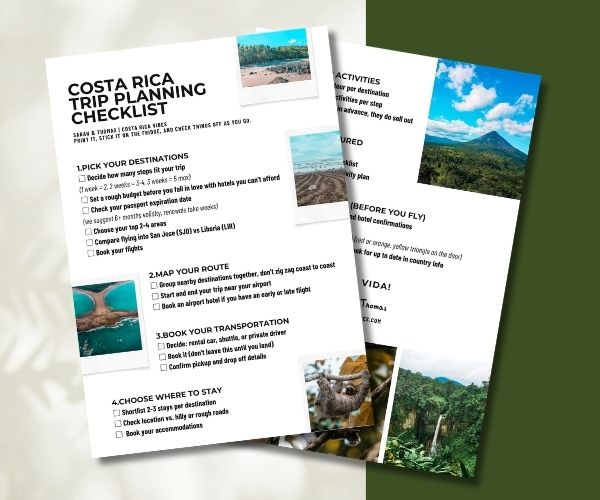
Planning a trip to Costa Rica? We’ll walk you through it step by step
Sign up now and get your free trip planning checklist instantly.
With tourism being the biggest income source in the country, the way visitors travel is very important. A lot of what makes Costa Rica special exists because of the decision to protect it and that only continues if travelers and businesses hold up their end of the deal.
The Truth About Ecotourism Here
It is hard to balance the pros and cons that the ecotourism model has had on Costa Rica.
Personally, I think the eco-friendly travel identity Costa Rica has built has been mostly positive for the country. A lot of that is thanks to the efforts that the Costa Rican government and citizens have put into living up to this ecotourism classification and preserving the delicate balance of increasing tourism while simultaneously preserving the land and culture.
But there are real downsides too. The cost of living has gone up significantly because of tourism, and not everyone in the country can keep up with that, especially people not working in the tourism sector. And then there are foreigners like us, who move here and sometimes set up businesses that could potentially take opportunities away from locals. It is something I think about a lot and struggle with.
This is why we try to always recommend Costa Rican-owned companies when we can. I won’t pretend we always get that right. But all we can do is try our best and hope we are helping rather than hurting. And that goes for you as a traveler too.
Okay, that is my TED Talk on Costa Rica ecotourism. 😉 Now the fun stuff!
Eco Lodges in Costa Rica by Region
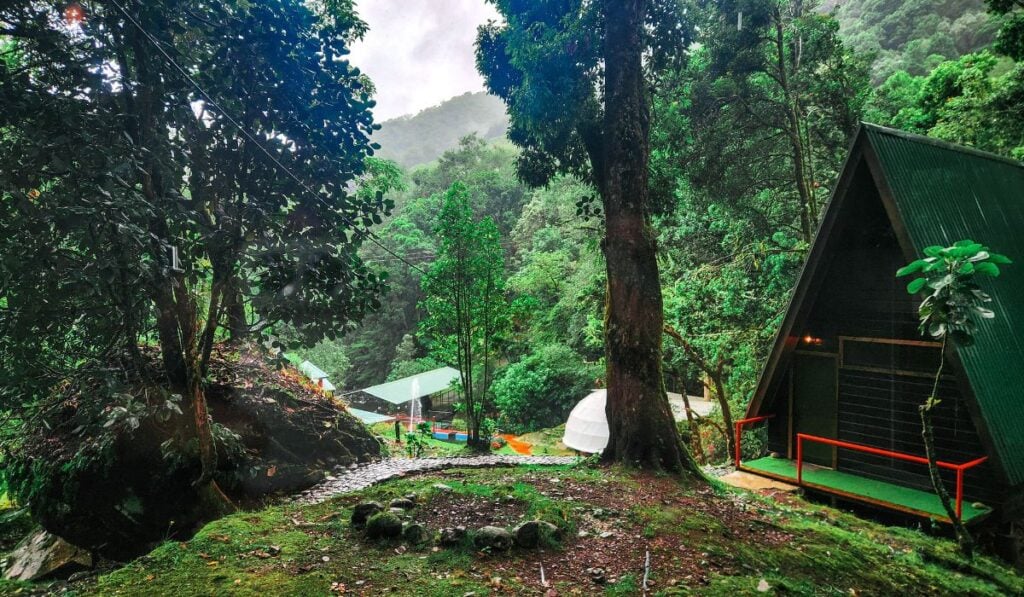
Costa Rica has incredible eco-friendly accommodation options at every price point. We have organized them by region so you can find the best fit for your itinerary. Here are some we have either visited ourselves or know great things about.
A quick note before we get into it: not every place that calls itself an “eco lodge” actually is one. We cover how to spot the real deal further down in this guide.
Caribbean Coast
The Caribbean coast is one of the most biodiverse regions in the country. Think turtle nesting beaches, dense jungle, and a completely different vibe from the Pacific side.
- Tortuga Lodge & Gardens (High-End — Tortuguero) Iconic river-view lodge on 150 acres of private land right next to Tortuguero National Park. One of the best bases for turtle season.
- Shawandha Lodge (Mid-Range — Puerto Viejo) 14 jungle bungalows on 5 acres of private forest near Puerto Viejo, just a short walk from Playa Chiquita. Pool with waterfall, great restaurant, and resident sloths on the property.
- Hotel Aguas Claras (High-End — Puerto Viejo) Boutique eco lodge on Playa Chiquita south of Puerto Viejo, created by a mother-daughter artist team from San José. Colorful bungalows, open-air Afro-Caribbean restaurant, and beachfront club. Part of the Cayuga Collection of sustainable luxury hotels. One Michelin Key.
Osa Peninsula
The Osa Peninsula is home to Corcovado National Park. It is one of the most biodiverse places on earth. If serious eco travel is what you are after, this is the region for it.
- Lapa Rios Ecolodge (High-End) 17 private bungalows on over 1,000 acres of protected land near Puerto Jiménez. Generates its own energy, grows its own food, and has supported local schools for over 25 years. The benchmark for eco lodges in Costa Rica.
- Aguila de Osa Rainforest Lodge (High-End) Perched above Drake Bay with Pacific views, all meals included, and direct access to Corcovado and Caño Island. Great for adventure-focused travelers.
- Copa de Arbol (High-End) The only eco lodge in Drake Bay with its own private beach. It’s accessible by boat only. Luxury bungalows, a terraced pool, and toucans and monkeys visible from your terrace.
Northern Mountains
- Arenal Observatory Lodge & Trails (Mid-Range — La Fortuna) The only hotel inside Arenal Volcano National Park. Originally a Smithsonian research station, now a CST-certified lodge with 870 acres, 500+ bird species, and volcano views from every room.
- Finca Luna Nueva Lodge (Mid-Range — La Fortuna) Certified organic biodynamic farm just south of La Fortuna. Pool, spa, forest trails, and food sourced almost entirely on site.
- Senda Monteverde Hotel (High-End — Monteverde) Solar-powered, plastic-free, and dedicated to sustainability.
- Monteverde Lodge & Gardens (Mid-Range — Monteverde) One of the original eco lodges in Monteverde. Private cloud forest reserve, solar-heated water, butterfly garden, and a great restaurant.
Central Valley
- El Silencio Lodge & Spa (High-End) About an hour from the San José airport in dense jungle near Bajos del Toro. Suites and villas with mountain views, three waterfall trails, a full spa, and yoga deck. This one has been on our personal bucket list for a while.
- Danica Cloud Forest Lodge (Mid-Range) In San Gerardo de Dota — one of our favorite places in the country. Art gallery, excellent restaurant with an organic herb garden, private hot tubs, and incredible cloud forest views.
- Peace Lodge (High-End) A luxurious mountain retreat in Vara Blanca, about an hour from San José. Stunning waterfall views, private pools in select rooms, on-site wildlife refuge, and one of the most dramatic settings of any lodge in the country.
Guanacaste
- Hacienda Guachipelin (Mid-Range) CST-certified working ranch near Rincón de la Vieja Volcano. Hot springs, zip-lining, river tubing, and horseback riding all on site. Great for active travelers who want everything in one place.
- Rio Perdido Hotel & Thermal River (High-End) Eco-luxury lodge on a 1,500-acre private reserve built around a naturally heated thermal river canyon. Carbon-neutral certified, five-star Blue Flag rating, farm-to-table restaurant, and some of the best adventure activities in Guanacaste.
How to Spot a Genuine Eco Lodge
Keep in mind that “eco lodge” can really mean whatever someone wants it to mean. Hotel owners know the term has a positive connotation that can attract customers and there is no official requirement to use it in Costa Rica.
If sustainability genuinely matters to you, email the property before you book and ask them directly how they define it. What do they actually do? Solar power? Greywater systems? Locally sourced food? Community programs? The good ones will have real answers.

The most reliable signal to look for is the CST seal. The Certificate for Sustainable Tourism issued by the ICT (Costa Rica’s tourism institute). It is a verified classification system and the only one that actually means something. Look for it on the property’s website before you book.
Eco-Friendly Activities

Most activities in Costa Rica are naturally eco-friendly because you will likely spend most of your time outside anyway. Here are some great options with minimal environmental impact that also help support people on the ground.
Hike in a National Park
All the national parks are amazing, but for a really unique experience we suggest Corcovado National Park on the Osa Peninsula. It is one of the most biodiverse places on earth and entrance fees go directly toward conservation.
Wildlife Experiences
Costa Rica has some of the best wildlife watching in the world and it is one of the biggest draws for eco-conscious travelers. You can spot sloths, scarlet macaws, sea turtles, humpback whales, monkeys, and so much more, often just by being in the right place at the right time.
Tortuguero is the place for turtle nesting season. Uvita is one of the best spots for whale watching. And sloths turn up almost everywhere. Your best chance is an early morning walk in any forested area.
Relax on a Beach
With amazing coastline on both the Pacific and Caribbean coasts, there is no shortage of beaches to enjoy. All beaches in Costa Rica are legally required to have public access and are free, always. Beyond relaxing, there is always surfing, snorkeling, and kayaking to keep things interesting.
See a Volcano Up Close
There are several volcanoes worth visiting in Costa Rica.
Our favorites for getting up close are Poás Volcano, Irazú Volcano, Turrialba Volcano, and Rincón de la Vieja.
And, of course, Arenal in La Fortuna is incredible as well.
Visit a Waterfall
Waterfalls are everywhere in Costa Rica and there is so much variety. There are places with multiple falls, spots you can swim under, and some with that crazy bright blue coloring. Río Celeste is one of our absolute favorites. Find out more in our complete waterfall guide.
Walk on Hanging Bridges
Our two favorite places for hanging bridges are La Fortuna (views of Arenal Volcano) and Monteverde (suspension bridges above cloud forest canopy).
Go Zip-Lining
It is possible to go zip-lining all over the country. Our absolute favorites are Monteverde and La Fortuna because the views are on another level.
Responsible Wildlife Tourism
Costa Rica has a well-earned reputation for incredible wildlife, but not every wildlife experience you will come across is a good one. Here is what to look for and what to avoid.
What to look for in a legit wildlife sanctuary:
- Animals are in large, naturalistic enclosures, not small cages or on leashes
- The goal is rehabilitation and release, not permanent captivity for tourism
- You cannot hold, touch, or take photos with the animals
- Staff can explain the story of each animal and their rehabilitation plan
- The facility has certifications or is affiliated with recognized conservation organizations
What to avoid:
- Any place that lets you hold a sloth, monkey, or other wild animal for a photo
- “Rescue centers” where animals perform or are used as props
- Tours that guarantee wildlife sightings by using bait or disturbing habitat
- Butterfly farms and frog exhibits that exist purely for tourist revenue with no conservation mission
👉 For our full list of recommended sanctuaries and rescue centers, see our Costa Rica Animal Sanctuaries guide.
When you are out in nature, stick to marked trails in national parks, never feed wildlife, and keep a respectful distance.
Eco Travel Tips on the Ground
- Use reef-safe sunscreen. Regular sunscreen is damaging to coral reefs and marine life. If you are snorkeling or spending time at the beach, switch to a reef-safe formula before you travel. It makes a real difference.
- Skip single-use plastics. Costa Rica has been working to reduce single-use plastics and many businesses have already made the switch. Bring a reusable water bottle. The tap water in most parts of the country is safe to drink and one of the best in Central America.
- Look for the CST seal. When booking any business in Costa Rica (hotels, tour operators, transport companies) look for the Certificate for Sustainable Tourism seal. It is the real indicator of verified sustainable practices.
- Support Costa Rican-owned businesses. Being a good eco traveler is not just about the environment. A big part of it is preserving local culture. For us, that means eating at local sodas, buying from farmers markets, and booking with Costa Rican-owned operators whenever we can.
- Stick to marked trails. Especially in national parks and protected areas. Going off-trail damages habitat and disturbs wildlife even when it doesn’t look like it.
For more Costa Rica travel inspiration, follow us on Instagram and join our Costa Rica Vibes Facebook Group where fellow travelers and locals share tips and answer questions daily.
You Might Also Like:
🌴 Plan Smarter, Travel Easier
Before you go, here are the tools we personally use for every Costa Rica trip:
🚗 Should I rent a car in Costa Rica?
Having your own car gives you the most flexibility to explore beaches, volcanoes, and waterfalls at your own pace.
- Save 10% Plus Other Perks with Our Adobe Rental Car Discount
- You might also consider; shared or private shuttle services
🏄🏽 How can I book tours and activities?
We love Viator for its wide selection, verified reviews, and free cancellation on most tours.
🍍 I’m overwhelmed with planning. Can you help?
No worries! We’ve got you! You can:
- 📧 Sign up for our email list (we walk you through the planning process step-by-step)
- 🗺️ Visit our Start Here Page for planning guidance.
- 💼 Check out our ready-made Costa Rica itinerary for the perfect one-week trip plan
- 🤖 Try Slothy, our free AI trip planner, for a personalized route with hotel and destination suggestions.
✈️ What is the best way to book a flight?
Use Skyscanner to compare flights into both San José (SJO) and Liberia (LIR).
🛏️ What is the best way to book my Costa Rica hotels?
We like Booking.com for hotel bookings and VRBO for private villas and vacation homes.
🗣️What is the main language in Costa Rica?
The main language in Costa Rica is Spanish. Most people working in tourism speak at least some English.
💰 What is the currency in Costa Rica?
The currency used in Costa Rica is the Costa Rican colón (CRC). However, the US dollar is widely accepted in most tourist areas
📞 What is the best way to stay connected?
An eSIM from Airalo is the easiest way to get instant 4G data when you land. No kiosk or SIM swap required.
🌴 Is Costa Rica safe?
Generally, Costa Rica is considered safe for tourists. However, like any travel destination, it’s best to use caution and be aware of your surroundings.
🛂 Do you need a passport to go to Costa Rica?
Yes, Costa Rica is its own country. You will need a passport to visit.

Hi! We’re Thomas (the German) and Sarah (the US-er)
We met in Virginia, moved to Germany, and since 2016 we have lived in sunny Costa Rica.
It was a spontaneous decision to move here, but it was the best decision!
Now we spend our days roaming the country to bring you the very best in Costa Rica travel here on Costa Rica Vibes.
Sarah is the writer. Thomas is the one keeping it all together.
Want the whole crazy story?

Sarah McArthur
Sarah McArthur is the co-founder and main writer of Costa Rica Vibes.
She is originally from the United States but has lived in sunny San Jose, Costa Rica since 2016.
She has traveled all over the country and now considers herself a self-proclaimed Costa Rica travel expert.
Read More About the Author