
6 Hummingbird Species in Costa Rica and Exactly Where to Find Every Single One
Disclaimer: This article may contain affiliate links. We may earn a commission at no extra cost to you
Costa Rica is home to over 50 species of hummingbirds. I know, crazy, right? These tiny, iridescent birds are captivating to watch as they dart from flower to flower, often coming surprisingly close to people.
If you’re not a dedicated birder, you might not want to memorize all 50+ species. The good news? There are just a handful that you’re very likely to encounter during your visit. Below are six of the most common and easiest to spot hummingbirds in Costa Rica.
We created this guide to walk you through:
- The most common hummingbird species in Costa Rica
- How to identify them by appearance and behavior
- The best places in the country to see them
- Fun hummingbird facts
- Tips for spotting them in the wild
- How to attract them to your garden (even at home!)
Let’s get into it!
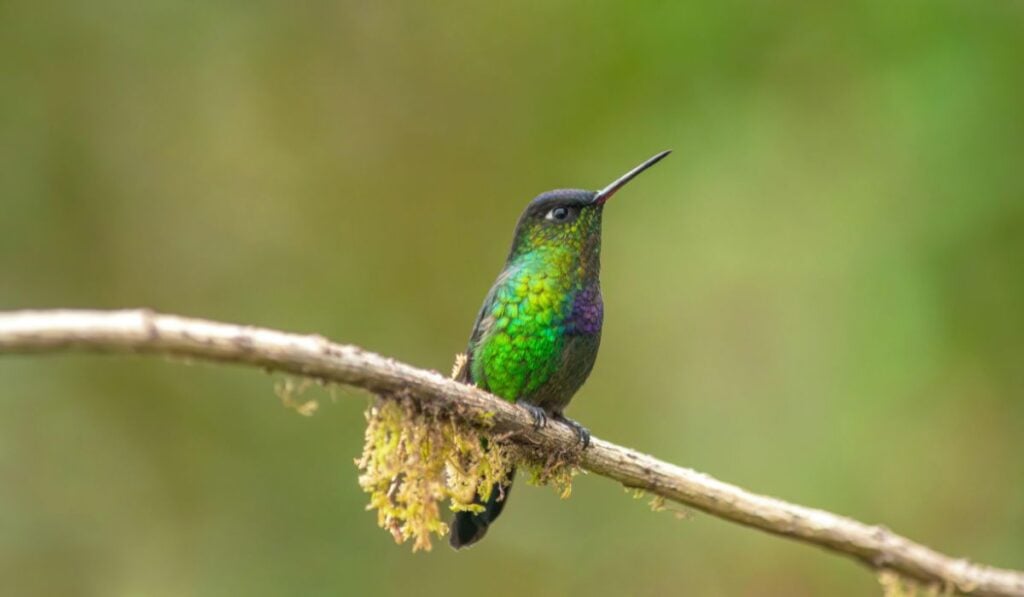
At a Glance: Hummingbirds in Costa Rica
- Total species: Over 50 recorded across the country
- Most common species: Rufous-tailed Hummingbird, Violet Sabrewing, Green-crowned Brilliant
- Best places to spot them: Monteverde, San Gerardo de Dota, La Selva, cloud forests, and gardens with feeders
- Best time of day: Early morning and late afternoon
- What they feed on: Nectar from flowering plants, small insects, and sugar water from feeders
- How to attract them: Native flowers, nectar feeders, perching spots, and water sources
1. Rufous-tailed Hummingbird
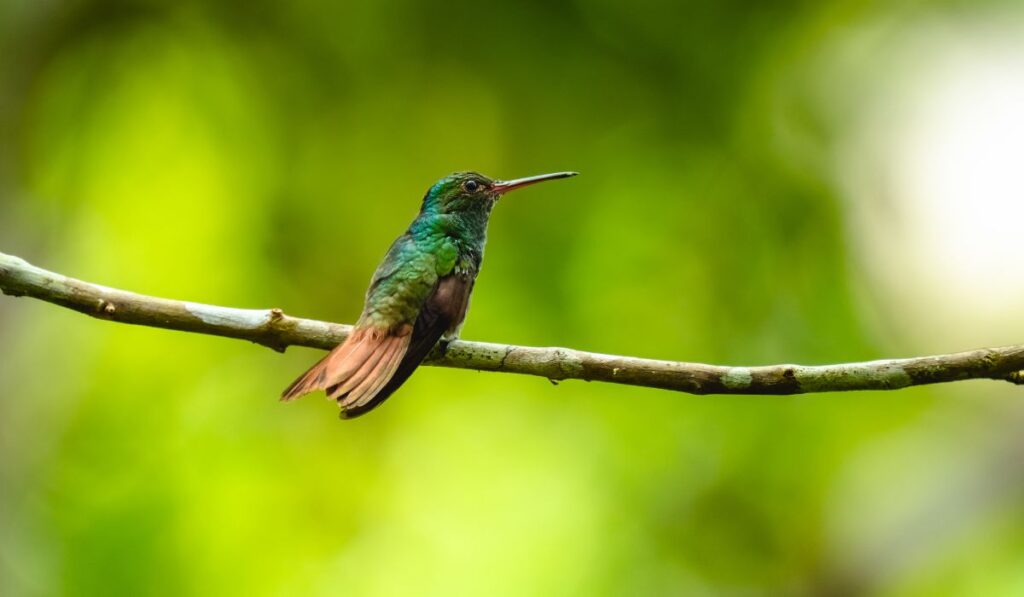
This is one of the most widespread hummingbirds in Costa Rica, and one of the easiest to spot. It is known for its bold attitude and striking tail, it’s a common visitor to backyard feeders.
Appearance
- Bright emerald green body
- Distinctive rufous (reddish-orange) tail
- Straight black bill
- About 4 inches (10 cm) long
Fun Facts
- One of the most aggressive and territorial hummingbirds in Costa Rica
- Will chase away much larger birds from feeders
- They are often the first hummingbird people see in gardens
- Found almost everywhere below 2,200 m
Where to Spot Them
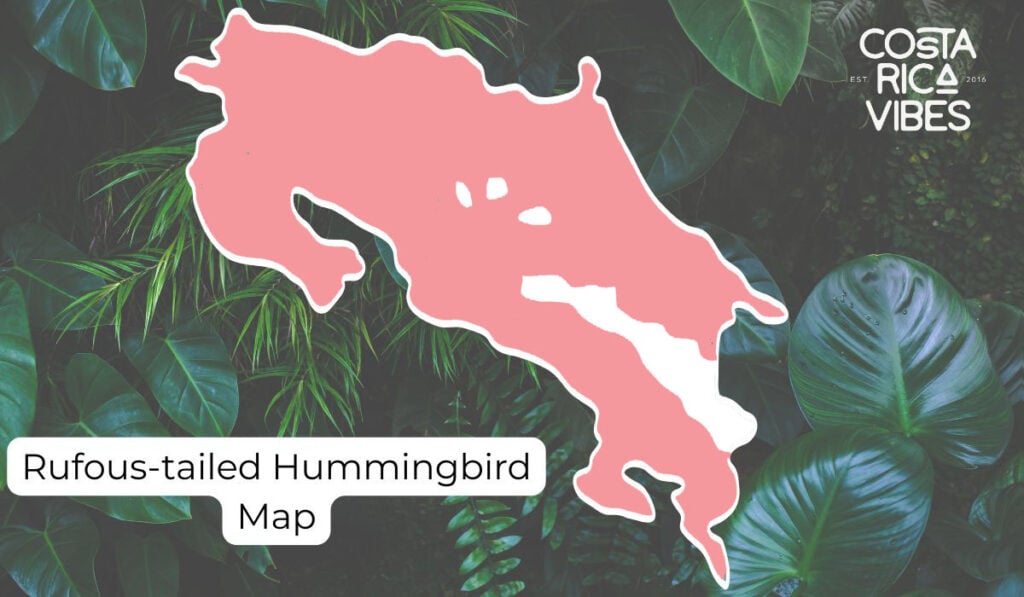
- Common in gardens, parks, and forest edges
- Frequently seen around feeders in La Fortuna, San José suburbs, and the Central Valley
- There is a chance you could see them almost anywhere in the country
2. Green-crowned Brilliant
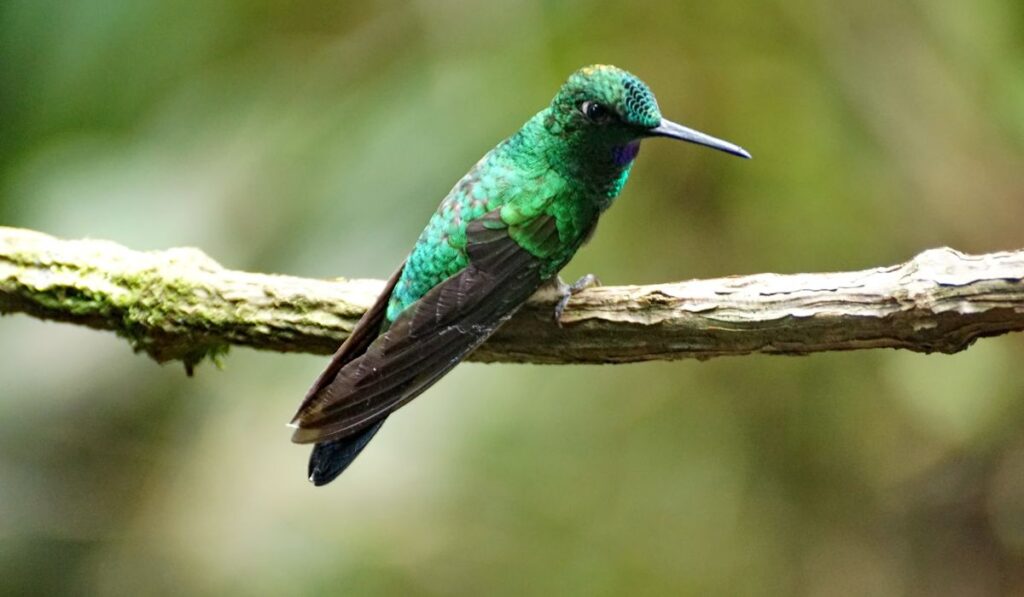
Appearance
- Males: Shimmering green body with a violet throat and bright green crown
- Females: Speckled white throat and belly with a bold white stripe behind the eye
- Around 5 inches (13 cm) long
Planning a trip to Costa Rica? We’ll walk you through it step by step
Sign up now & get your free trip planning checklist instantly.
Fun Facts
- Often dominates hummingbird feeders with confidence
- Loves Heliconia and other tubular flowers
- Found mostly in cloud forests
Where to Spot Them
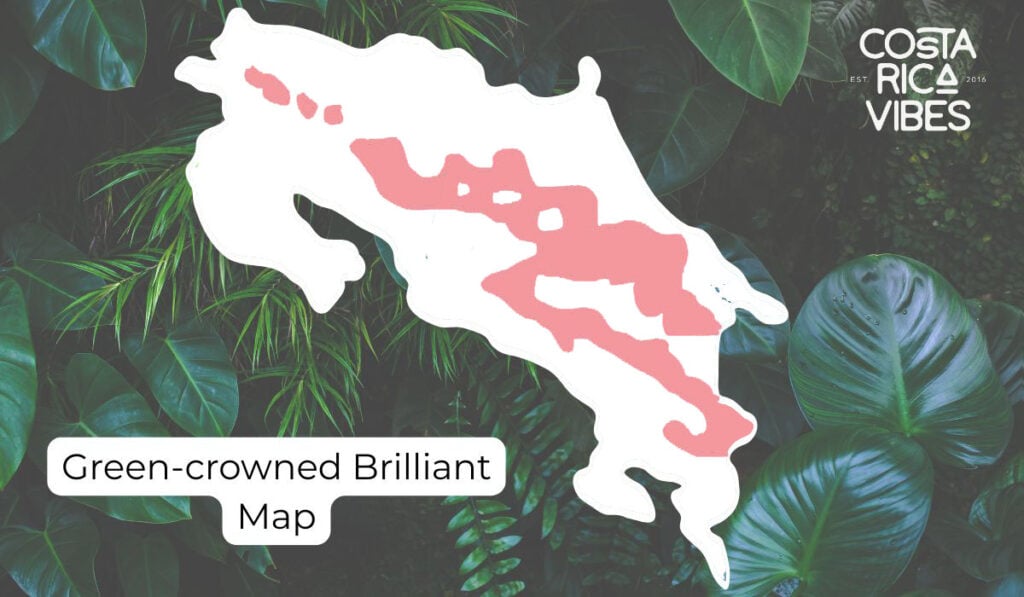
They are very common in Monteverde and Poás Volcano areas
3. Fiery-throated Hummingbird
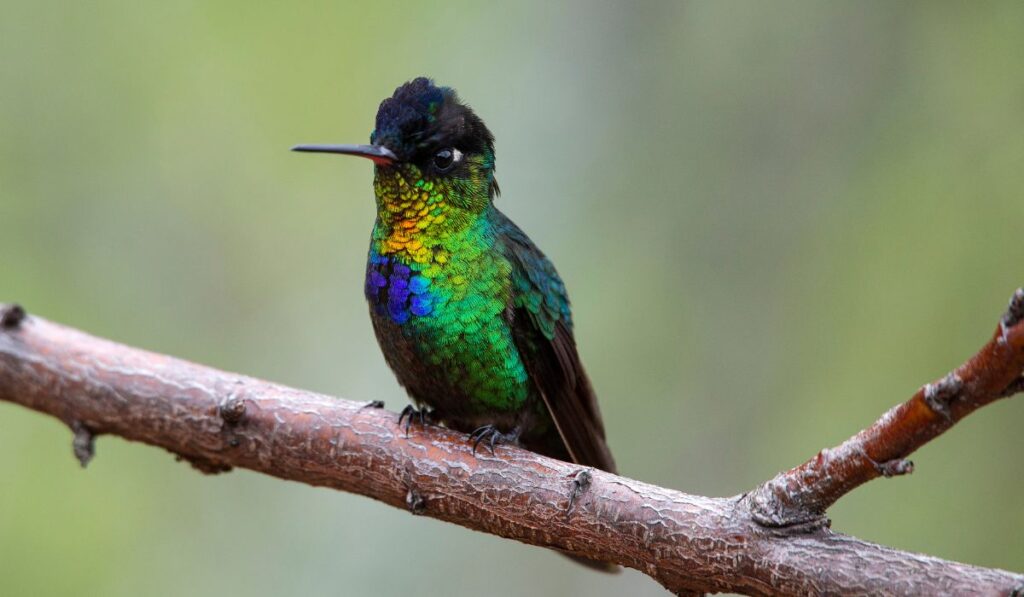
Appearance
- Dark green body with blue wings and tail
- When caught in the right light, throat flashes brilliant orange, gold, and blue
- Medium-sized: about 4.3 inches (11 cm)
Travel Essentials for Your Costa Rica Trip
Don’t let unplanned medical expenses or trip interruptions overshadow your dream Costa Rican vacation.
- 🚗 Save 10% on your car rental with Adobe Rent-A-Car: free second driver, 0% deductible, and top service.
- 🚐 Compare shared shuttles or private transfers: easy rides from airports to anywhere in the country.
- 🎟 Book your tours on Viator: secure payments, verified operators, and free cancellation.
- 💳 Protect your trip with Heymondo Insurance: covers flight delays, medical care, and lost luggage.
Fun Facts
- Found only in high elevation areas
- Can appear dull unless the sun hits their throat just right
- One of the most aggressive species at feeders
Where to Spot Them
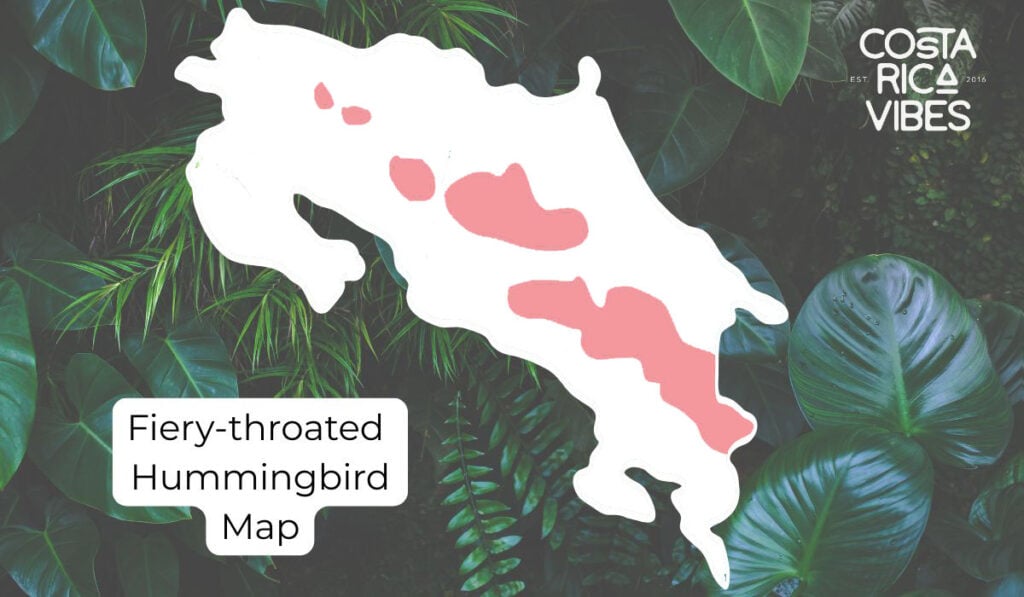
- Cerro de la Muerte, San Gerardo de Dota, and Talamanca range
- Look for them above 2,500 m
4. Snowy-bellied Hummingbird
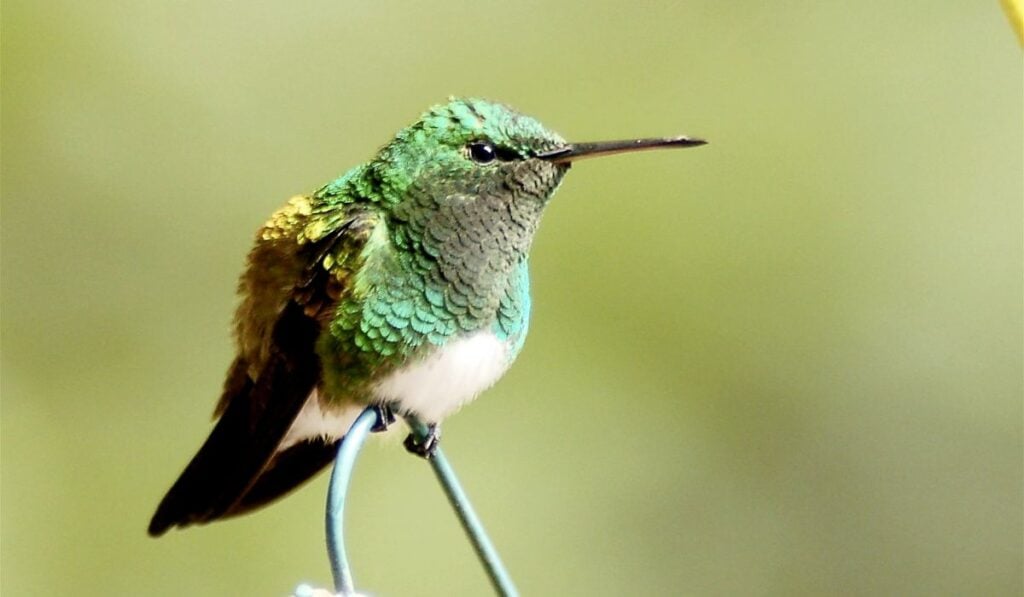
A quieter species, the Snowy-bellied Hummingbird is often seen perched in gardens. It’s less showy, but still quite beautiful with its white belly and bronze flanks.
Appearance
- Green upperparts and coppery flanks
- Bright white belly and a red-and-black bill
- Around 3.9 inches (10 cm)
Fun Facts
- Less aggressive, often overlooked next to more vibrant species
- Often perches in the open on twigs or fences
- Native to southern Costa Rica and Panama
Where to Spot Them
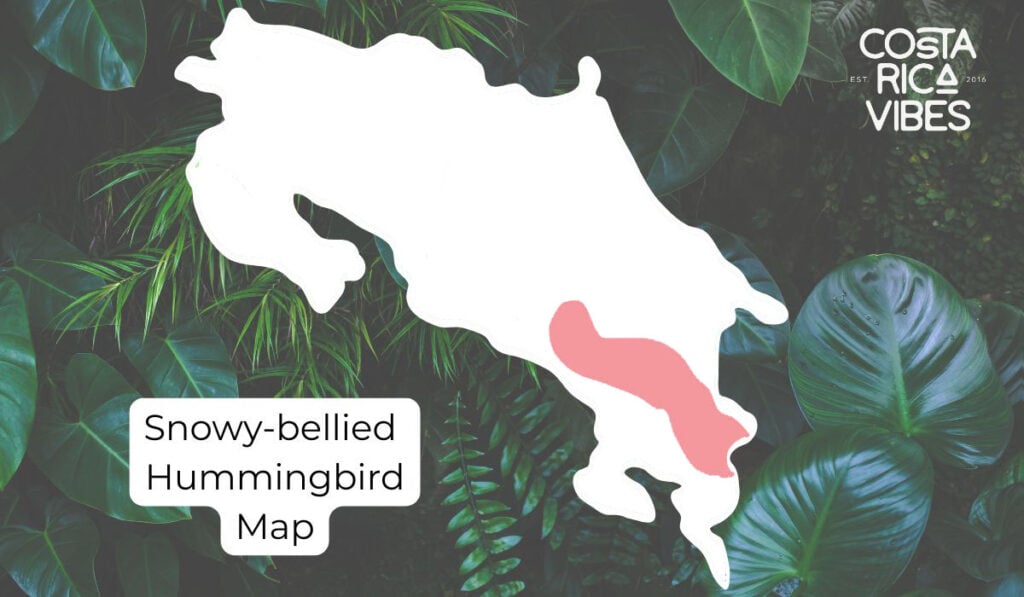
They are often only seen in a small area of the jungle near the Southern Pacific Coast.
5. Violet Sabrewing
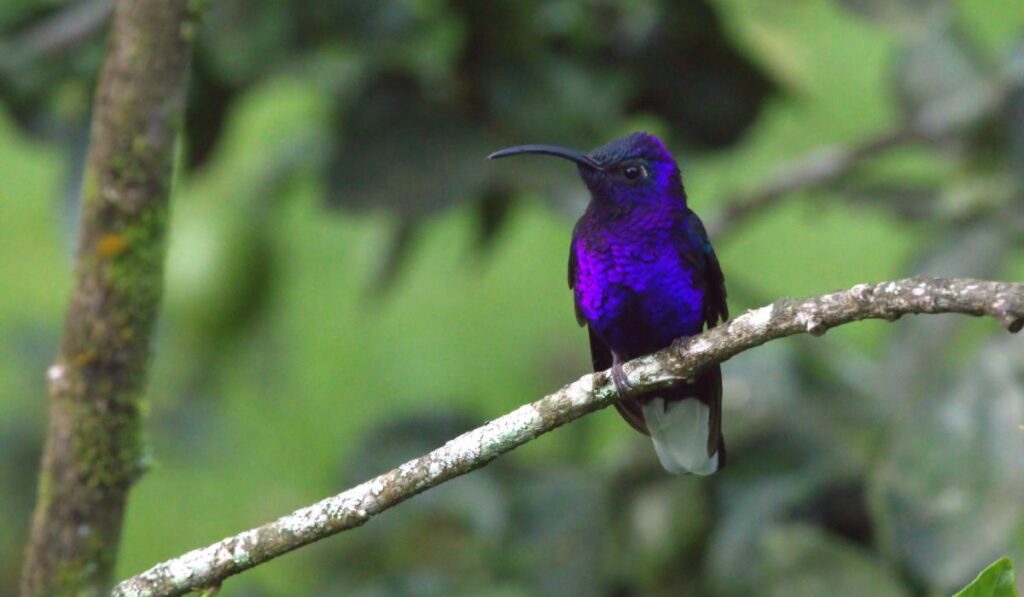
Appearance
- Males: Deep violet plumage with green back and curved black bill
- Females: Green above with white belly and violet flecks on the throat
- Largest hummingbird in Costa Rica at about 6 inches (15 cm)
Fun Facts
- Named for the broad, sabre-like flight feathers on the wings
- Flies with slow, strong wingbeats and hovers in place
- Males often perch in open areas to display
Where to Spot Them
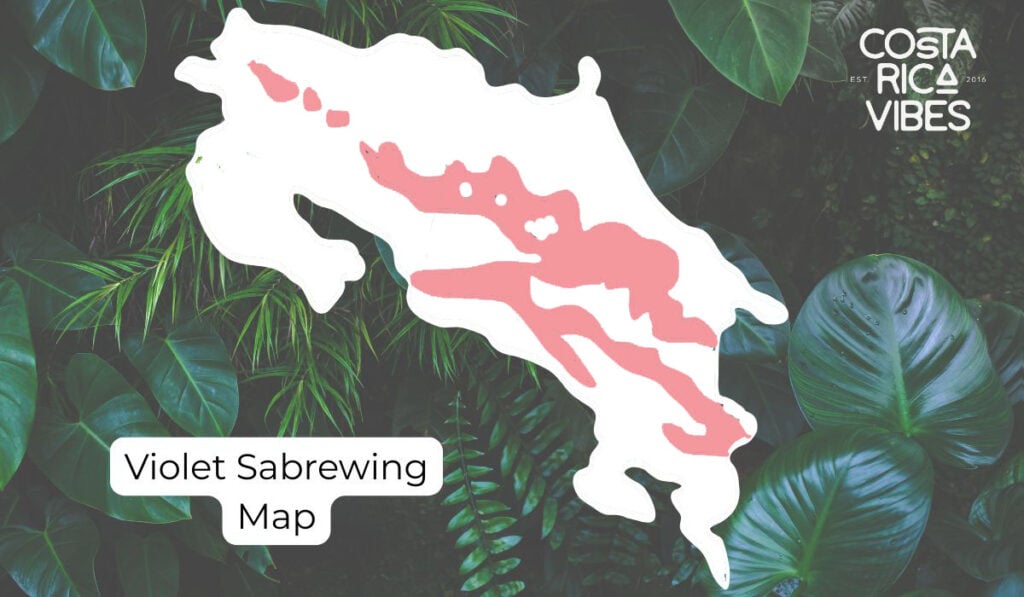
- Monteverde, San Gerardo de Dota, and foothills of both slopes
- Often seen in hummingbird gardens at lodges
6. White-necked Jacobin
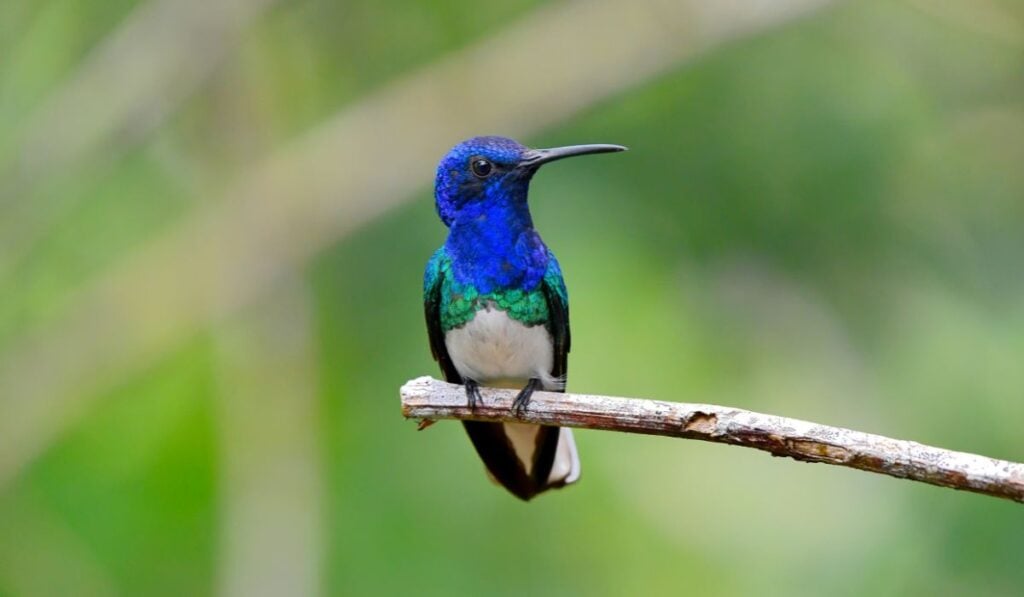
This flashy hummingbird is known for its boldness and frequent visits to lowland feeders. Males, in particular, stand out with their rich colors.
Appearance
- Males: Deep blue head and chest, white belly, green back
- Females: Green back with white belly and green flecks on throat
- Medium-sized: about 4.7 inches (12 cm)
🐒 First time in CR? Avoid rookie mistakes—Download your Trip Kit
Fun Facts
- Bold and curious; often approaches people at feeders
- Flashes white tail feathers in flight
- Common in lowland rainforests
Where to Spot Them
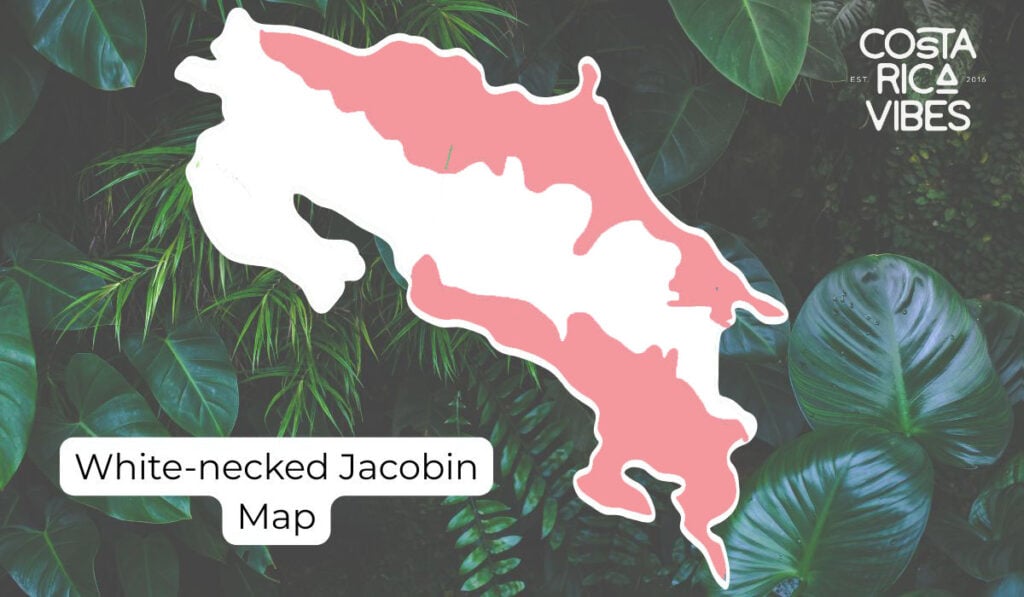
- The Central and Southern Pacific Coast
- Caribbean lowlands, especially near Tortuguero and Cahuita
Where to See Hummingbirds in Costa Rica
If you’re eager to spot hummingbirds during your trip, these places are known for consistent sightings and even dedicated viewing areas:
- Monteverde Cloud Forest Reserve
- La Paz Waterfall Gardens
- San Gerardo de Dota
- Hummingbird Cafes
Several lodges and cafes in Costa Rica have established “hummingbird cafes,” where they maintain feeders to attract large numbers of hummingbirds. These are perfect for photography or relaxed birdwatching over coffee.
How to Attract Hummingbirds at Home
You don’t have to be in the tropics to enjoy hummingbirds. For example, my parents live in Massachusetts and my mom frequently has hummingbirds in her backyard in the summer.
If you love hummingbirds, here are some easy tips for attracting them to your own yard:
1. Set Up a Nectar Feeder
Use a feeder with red accents and fill it with this simple homemade nectar:
- 1 part white sugar
- 4 parts water
- No red dye needed (and it’s not healthy for them)
Boil the water, dissolve the sugar, and let it cool. Change the nectar every 2–3 days to prevent fermentation or mold.
It is also possible to buy pre-made hummingbird feeder liquid, but it is way more affordable to just make it yourself.
2. Provide Native Plants
Plant tubular, nectar-rich flowers like:
- Salvia (Sage)
- Bee balm
- Trumpet vine
- Coral honeysuckle
These attract hummingbirds naturally and create a colorful garden.
3. Place Feeders Near Shelter
Hang feeders near shrubs or trees to give hummingbirds a safe place to perch and rest between feedings.
4. Keep Things Clean
Clean feeders at least once a week with hot water (no soap). During hot weather, we suggest cleaning it more frequently.
5. Add a Water Feature
Hummingbirds love to bathe in fine mist or shallow moving water. If you are really a hummingbird fan, you might want to consider a gentle fountain or misting sprayer.
Final Thoughts on Hummingbirds in Costa Rica
Even after all these years in Costa Rica, hummingbirds still stop us in our tracks. There’s something magical about spotting a flash of color zipping through the garden or catching that perfect throat shimmer when the sun hits just right.
Whether you’re watching them from a cloud forest balcony, a jungle café, or your own backyard feeder, these tiny birds bring a whole lot of joy. They’re fast, feisty, and totally unforgettable.
Seen a hummingbird in Costa Rica? Have a favorite species or tip to share? Drop it in the comments. We’d love to hear about your hummingbird moments!
Need More Help? We’ve Got You!
💬 Travel Facebook Group
Ask questions, get real-time travel tips, and learn from people currently exploring Costa Rica. Updated daily.
✉️ Free Travel Newsletter
Insider Costa Rica tips, planning reminders, discounts, and local updates, straight to your inbox.
✈️ Travel Planner
Prefer someone else to handle the details? Our favorite trusted planning partner can build & book your whole trip.
🦥 AI Trip Assistant
Let our Costa Rica AI helper (Slothy) suggest routes, hotels, packing tips, & must-dos, personalized to your trip.
🚗 10% Off Car Rentals
Use our exclusive discount with Costa Rica’s most trusted rental company. No hidden fees, no surprises, just great service.
🧭 Costa Rica Itinerary
Stress-free route planning! Download our ready-made itinerary for 7+ day trips from San Jose Airport.
You Might Also Enjoy:
🌴 Plan Smarter, Travel Easier
Before you go, here are the tools we personally use for every Costa Rica trip:
🚗 Should I rent a car in Costa Rica?
Having your own car gives you the most flexibility to explore beaches, volcanoes, and waterfalls at your own pace.
- Save 10% Plus Other Perks with Our Adobe Rental Car Discount
- You might also consider; shared or private shuttle services
🏄🏽 How can I book tours and activities?
We love Viator for its wide selection, verified reviews, and free cancellation on most tours.
🍍 I’m overwhelmed with planning. Can you help?
No worries! We’ve got you! You can:
- 📧 Sign up for our email list (we walk you through the planning process step-by-step)
- 🗺️ Visit our Start Here Page for planning guidance.
- 💼 Check out our ready-made Costa Rica itinerary for the perfect one-week trip plan
- 🤖 Try Slothy, our free AI trip planner, for a personalized route with hotel and destination suggestions.
✈️ What is the best way to book a flight?
Use Skyscanner to compare flights into both San José (SJO) and Liberia (LIR).
🛏️ What is the best way to book my Costa Rica hotels?
We like Booking.com for hotel bookings and VRBO for private villas and vacation homes.
🗣️What is the main language in Costa Rica?
The main language in Costa Rica is Spanish. Most people working in tourism speak at least some English.
💰 What is the currency in Costa Rica?
The currency used in Costa Rica is the Costa Rican colón (CRC). However, the US dollar is widely accepted in most tourist areas
📞 What is the best way to stay connected?
An eSIM from Airalo is the easiest way to get instant 4G data when you land. No kiosk or SIM swap required.
🌴 Is Costa Rica safe?
Generally, Costa Rica is considered safe for tourists. However, like any travel destination, it’s best to use caution and be aware of your surroundings.
🛂 Do you need a passport to go to Costa Rica?
Yes, Costa Rica is its own country. You will need a passport to visit.

Hi! We’re Thomas (the German) and Sarah (the US-er)
We met in Virginia, moved to Germany, and since 2016 we have lived in sunny Costa Rica.
It was a spontaneous decision to move here, but it was the best decision!
Now we spend our days roaming the country to bring you the very best in Costa Rica travel here on Costa Rica Vibes.
Sarah is the writer. Thomas is the one keeping it all together.
Want the whole crazy story?

Sarah McArthur
Sarah McArthur is the co-founder and main writer of Costa Rica Vibes.
She is originally from the United States but has lived in sunny San Jose, Costa Rica since 2016.
She has traveled all over the country and now considers herself a self-proclaimed Costa Rica travel expert.
Read More About the Author